Beyond Seniors
When both parents need care How families manage when there's no taking turns
Updated September 2026
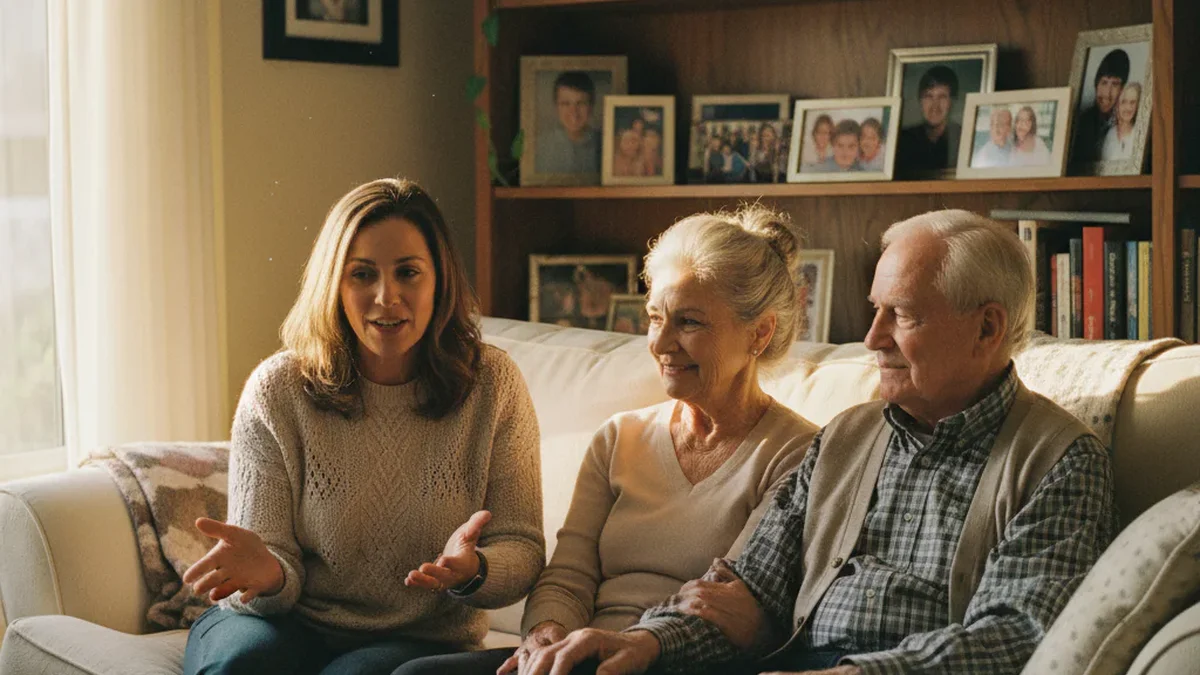
Article images are AI-generated illustrations. Some may include AI-generated people; they are illustrative and do not depict real caregivers, patients, experts, or FamilyCareWise contributors.
TL;DR: A 2020 national survey found 24% of caregivers were already caring for two or more people, up from 18% in 2015. When your parents both need help at once, triage first: whose needs are more urgent right now. Split the rest by strength and location, then bring in outside help.
When both parents need care at once, start with triage: figure out which parent's needs are more urgent, assign that parent primary attention, then divide what remains among siblings and bring in professional home care before the family breaks down.
A 2020 national survey by the National Alliance for Caregiving and AARP found that 24% of family caregivers were caring for two or more people, up significantly from 18% in 2015. Two people, two sets of medical and financial needs, and a family structure that was never built to run two care operations at once. Some families see it coming: one parent's decline is slow and visible for years before the second one starts. Others get no warning at all, a fall or a diagnosis lands on a Tuesday and the math changes overnight. Either way, the fundamentals are the same.
Three patterns behind "both parents need care"
Which pattern you are in affects which problem to solve first, so it is worth naming before anything else.
One parent with cognitive decline, the other with physical decline. In this pattern, one parent has Alzheimer's or another dementia, and the other has a physical condition such as heart failure, COPD, or arthritis-related mobility loss. The physically declining parent often keeps trying to care for the parent with dementia well past the point they are still able to, and an adult child ends up supporting both of them.
One parent hospitalized, the other still needing daily support at home. A hospitalization creates sudden, sharp urgency for one parent while the other parent's ordinary needs do not pause to accommodate it. The adult child is now splitting attention between a hospital room and a house. This version is the most acute because it arrives without warning and forces fast decisions.
Both parents declining at different rates. Neither parent has one clear crisis. Both are losing ground steadily, and because each individual change looks manageable on its own, the cumulative weight tends to sneak up on families. There is rarely a single day you can point to and say "that's when it got hard."
Same household or different cities: the logistics diverge fast
Where your parents live changes almost everything about how the work gets done.
When parents live together, one home care aide can sometimes provide supervision and company for both of them, which lowers the per-person cost. Grocery delivery, meal services, and home modifications solve the same problem twice with one purchase. The tradeoff is that when one parent's needs escalate, dementia-related agitation, wandering, and other behavior changes are a common trigger, the other parent's quality of life at home often takes the hit too. You cannot always fix one parent's situation without touching the other's.
When parents live apart, you are running two households, two care teams, and two calendars at once, and geography forces you to triage by distance as well as by need. Adult children with parents in different cities often notice, in hindsight, that the parent they were physically closer to got more of their attention by default, whether or not that parent needed it more. Naming the pattern is the first step to correcting it.
Triage first, then divide what's left
Triage is what makes dual caregiving survivable, because you cannot give both parents equal attention at the same moment. You assess who needs what most urgently, allocate accordingly, and revisit as things shift.
A workable starting point is to separate each parent's needs into four categories: medical, safety, daily functioning, and emotional support. Medical means conditions, medications, and appointments. Safety means fall risk, wandering, and medication errors. Daily functioning means meals, hygiene, and mobility, and emotional support means loneliness, anxiety, and engagement. Mapping both parents against those four categories side by side makes the real gaps visible instead of just the loudest problem that week.
Safety comes first, every time. A parent who is a fall risk, who wanders, or who is making dangerous medication errors needs attention now. Everything else can be scheduled.
It is worth pausing on what triage does not fix. Sorting the logistics well does not erase the toll of doing it. The same 2020 AARP and National Alliance for Caregiving survey that found the 24% figure above also found something else: caregivers with more weekly hours, more tasks, and a recipient living in their home reported the sharpest declines in their own self-rated health between 2015 and 2020. A good triage system reduces chaos without reducing the underlying load.
Triage is also not a one-time decision. A hospitalization, a new diagnosis, or a shift in cognition can flip the priority order overnight. Reassessing on a regular schedule keeps that picture from going stale; monthly is a reasonable rhythm for most families.
When the caregiver becomes the one who needs care
A specific and under-recognized version of this: one parent has been the other's primary caregiver for months or years, managing medications, driving to appointments, cooking, and covering overnight supervision. Then that parent's own health starts to slip, and a family that thought it had one care situation suddenly has two.
The same 2020 AARP and National Alliance for Caregiving survey found that spousal caregivers saw a sharper drop in self-rated health than caregivers of other relatives: 32% rated their own health excellent or very good in 2020, down from 45% in 2015. Spousal caregivers also tend to be the most singularly focused: the same survey found 91% of people caring for a spouse or partner were caring for that person and no one else. That focus may be part of why their own decline goes unnoticed longer. If your parents' arrangement fits this pattern, that decline is a documented risk, not a personal failing.
If you suspect this dynamic is developing, act before it becomes a crisis. Ask the caregiver-parent directly: when did they last see their own doctor, how are they sleeping, do they feel worn down. Watch for signs of caregiver stress: feeling lonely or disconnected, frequent physical complaints, or letting their own health appointments slide. Getting professional home care in place for the parent who is ill can take enough weight off the caregiver-parent to slow their own decline. For the version of this where the caregiver-parent's spouse specifically has dementia, this guide to caring for a spouse with dementia covers the grief and logistics unique to that pairing.
Splitting the work when siblings disagree
One parent is complicated enough when siblings do not see eye to eye. Two parents adds a second layer beyond who does what: which parent each sibling is even responsible for.
The arrangements that hold up divide by strength, availability, and geography instead of an equal split of tasks. One sibling may be better suited to talk with doctors and coordinate medical care. Another may be better with the finances and insurance paperwork. A third who lives closer may take on direct, hands-on care. None of those roles are identical, and none of them are worth less than the others.
Hold a family meeting specifically to map the current state: what does each parent need daily, what do they need weekly, what is already covered, and what is falling through. Write the agreements down, even informally, because verbal agreements that felt clear in the room tend to blur within a few weeks.
A recurring failure mode: the sibling who lives closest absorbs the visible, immediate tasks while siblings further away handle nothing. Proximity is not the same as sole responsibility. A sibling in another city can still manage care coordination calls, insurance paperwork, and financial tasks remotely. If those conversations are not already happening, start them.
Where professional home care fits
For most families managing two parents at once, professional in-home care is what makes the arrangement workable at all. A home care agency provides steady, reliable support for one or both parents without requiring a family member to be present around the clock.
Home care comes in tiers depending on what each parent needs. Personal care aides help with bathing, grooming, dressing, and getting around. Homemakers handle meals, light housekeeping, and errands, the kind of help Medicare itself does not pay for. Certified nursing assistants can manage more involved care tasks, and licensed home health aides can provide skilled nursing care when a physician orders it. For a fuller comparison of how in-home care stacks up against other settings, this comparison of in-home care and assisted living covers the tradeoffs.
When parents share a home, a single agency relationship can sometimes cover both of them. Scheduling two aides to overlap during the highest-need windows (mornings and evenings tend to be the heaviest) gives both parents coverage and the family a real break.
When you are evaluating agencies, ask three things: their experience with couples or multi-person households, how they handle scheduling if one person's needs suddenly spike, and what happens when an assigned aide calls in sick. Continuity matters more with cognitive decline: keeping a person with Alzheimer's to a familiar routine helps, and a rotating cast of aides works against that.
What Medicare, Medicaid, and long-term care insurance actually pay for
Two parents means two separate benefit sets, two insurance policies, and often a mix of shared and separate money. None of it is intuitive, and getting it wrong is expensive.
Medicare. According to Medicare's own coverage page, each parent's Medicare covers medically necessary, part-time or intermittent skilled nursing care. It also covers home health aide help, but only when that is paired with the skilled care. What Medicare does not cover is custodial or personal care: help with bathing, dressing, or using the bathroom, when that is the only help a parent needs. For most families, that gap is exactly where the out-of-pocket bills start: the ongoing custodial help, not the skilled nursing visits Medicare does cover.
Medicaid. Each parent's Medicaid eligibility is its own determination. It gets complicated when only one parent needs Medicaid-covered long-term care. Federal spousal impoverishment rules, described on Medicaid's own spousal impoverishment page, protect a portion of the couple's combined resources for the spouse who stays in the community rather than counting it against the applying spouse. These rules are legitimately complex and vary by state in their exact dollar limits. An elder law attorney is worth the consultation before either parent applies.
Long-term care insurance. If either parent bought a policy, each one pays out under its own terms, its own benefit triggers, its own daily amount, its own elimination period. There is no shared pool between two policies. Pull both policies now, before care starts, so the family knows what each one actually promises before a crisis forces the question.
Shared finances. Many older couples have combined their finances in ways that complicate individual care planning: joint accounts, shared Social Security income, and shared assets that are hard to cleanly attribute to one parent or the other. That matters for Medicaid planning, dependent-care tax questions, and estate planning later. A financial snapshot of both parents' assets, taken now while there is no emergency, gives the family something solid to work from later.
Burnout hits harder with two parents to manage
Every caregiver carries some risk of burnout. The same 2020 national data shows that risk climbing fastest for caregivers with more weekly hours, more tasks, and a recipient living in their home, and caring for two parents usually lands a family in that higher-intensity group. Even when neither parent's individual needs are extreme on their own, the load is bigger. It rarely arrives with proportionally more support attached.
One specific pattern worth watching for: the caregiver who holds it together through the acute crisis but never actually recovers once the crisis passes. Each new crisis then starts from a lower baseline than the last one. Recognizing the signs of caregiver burnout early is harder from inside the situation than it sounds; ask someone outside it for an honest read on how you are actually doing.
Self-preservation in dual caregiving takes more than rest. It takes structure. Professional care scheduled for both parents, instead of called in only during emergencies, is one piece. A real backup plan for when you get sick yourself is another. So is at least one block of time each week that actually belongs to you. Those are the conditions that let you keep functioning past the first few months.
The harder call: separate care settings
Families sometimes delay the harder decisions, moving one parent into assisted living or memory care, because they do not want to separate a couple who have been together for decades. That instinct is understandable and deserves a real look rather than a quick dismissal.
If one parent's needs are past what can be safely managed at home, and the strain is putting the other parent at risk, keeping both parents in the same setting is not automatically the kinder choice. Ask any community directly whether a spouse can move in or visit as often as they want; policies vary by community, and couples can often stay close without being in identical care settings. When the parent with cognitive decline was diagnosed before 65, the calculus shifts further still; this guide to young-onset dementia caregiving covers the job, income, and Medicare-timing complications that come with an earlier diagnosis.
These are decisions each family makes against its own values. Make them with the facts in hand, while there is still time to choose.
Frequently Asked Questions
How do you manage when both parents need care at the same time?
Start with a triage assessment: which parent has the more urgent or complex needs right now? Give that parent primary attention. Then sort out what each parent actually needs daily versus weekly, and decide which tasks a professional caregiver, a sibling, or a community resource can take on. Being the sole caregiver for both parents at once is not sustainable long-term. Bringing in a home care agency for one or both parents is often what makes the whole situation workable.
What happens when one parent is the other's caregiver and then gets sick too?
This is one of the most common and hardest dual-caregiving crises. The caregiver-parent often puts off their own care to keep caring for their spouse, so by the time their own needs are visible, the situation is urgent for both of them. Adult children need to step in before the caregiver-parent's health reaches a breaking point. Watch for the caregiver-parent skipping their own medical appointments, losing weight, or showing signs of exhaustion. Getting professional home care in place for the ill parent can take real pressure off the caregiver-parent's own health too.
How should siblings divide caregiving when both parents need help?
Divide by strength, geography, and availability, not by an equal split of tasks. One sibling may be better positioned to coordinate with doctors; another may handle the money; a third may provide hands-on care. Hold a family meeting to map out what each parent needs and match tasks to people honestly. Watch for the pattern where the closest sibling absorbs everything while distant siblings stay uninvolved, and correct it.
Does it cost more to arrange home care for two parents at once?
Often, but not always double. If both parents live in the same home, one aide can sometimes provide supervision and companionship for both, which lowers the per-person cost. Medicare covers part-time or intermittent skilled nursing and home health aide care for each parent separately, but it does not cover custodial help with bathing, dressing, or meals when that is the only care needed. Medicaid long-term care coverage is tied to each parent's own eligibility, though spousal impoverishment rules can protect part of the couple's combined resources for the spouse who stays home. Long-term care insurance, if either parent has it, pays out under that policy's own terms.
The information on this page is for educational purposes only and does not constitute medical, legal, or financial advice. Every family's situation is different. Please consult a qualified healthcare provider, licensed attorney, or certified financial planner for guidance specific to your circumstances.